Creativity is a Nonlinear Path
by Beth Bailey
Grinding it out is important to a creative routine.
And pottery is what I needed to keep that rhythm.
Pottery scaffolded me for a decade. It allowed space for me to stretch my creative energy.
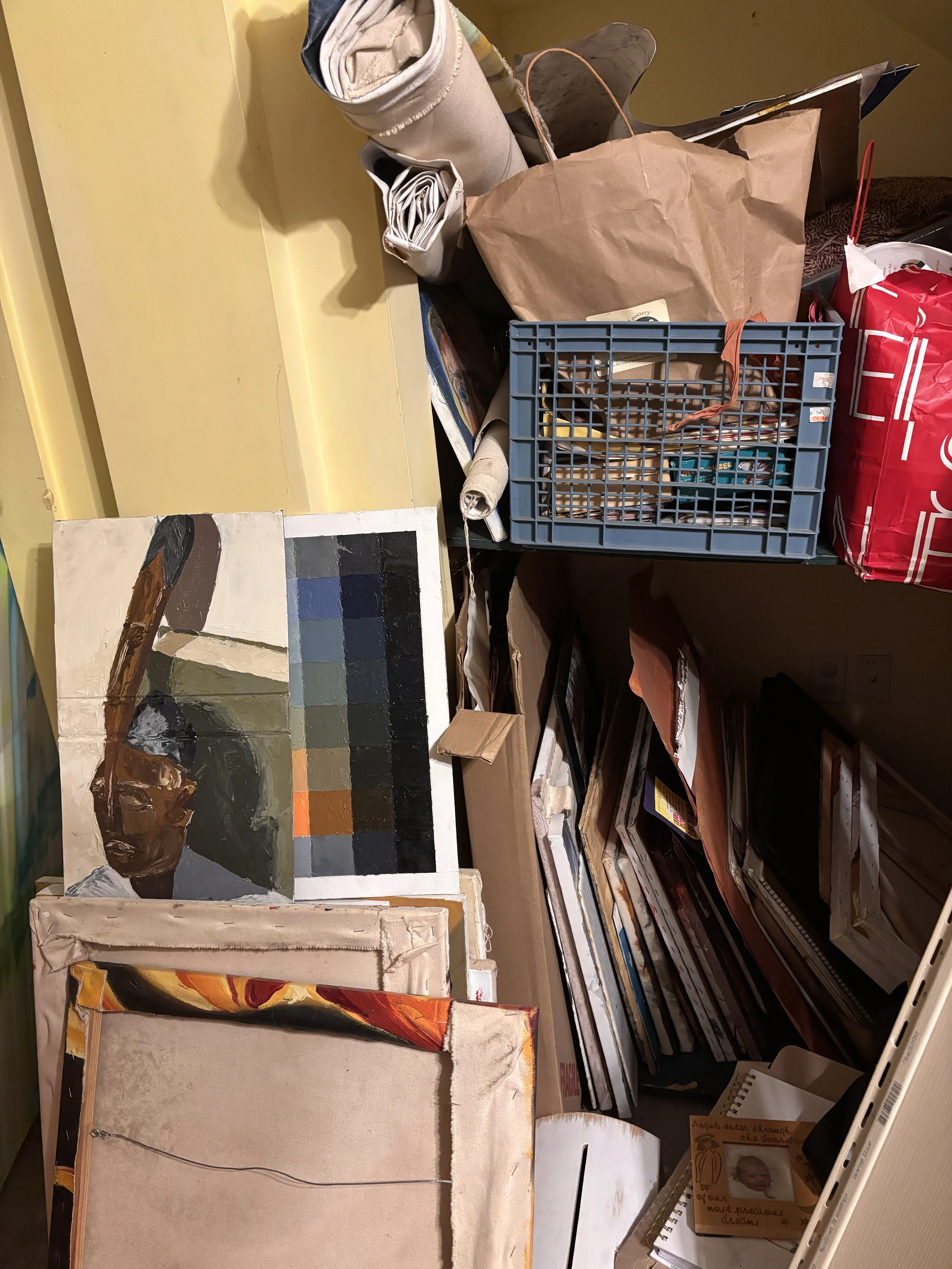
For fifteen years, I moved large canvases from one storage spot to the next.
I knew I was always coming back to painting and referred to these 30 or so canvases as “My Life’s Work.”
This effectively protected their space in my varied but limited storage areas.
In this collection, there are still-life and figurative studies, abstract landscapes, floral works about marriage, and folk art about death. The folk art paintings are physically and emotionally… big. So big that at one point I had to cut myself off from them, even though I was in the middle of painting one.
I let myself walk away
-
I knew I’d be back.
-
I let myself walk away - I knew I’d be back. -
One of the completed pieces from this series came through me and onto the back of a receipt while I was 22 and riding along in the back of my parents’ car. When I am in a regular studio rhythm I can experience these beautiful moments of being struck hard with a vision that so perfectly articulates something big, something elusive. I have to grab whatever I can to pull the idea quickly from my head and tack it down in the real world. After a lifetime of training, I find comfort in my ability to channel ideas this way. When this happens, it can be a salve for whatever its painful root may be.
In this case, I had to tack the idea down before it tried to float off and out the window on 93 South as we headed towards Bourne National Cemetery to bury my Godfather, my mom’s big brother. Uncle Billy had died by suicide.
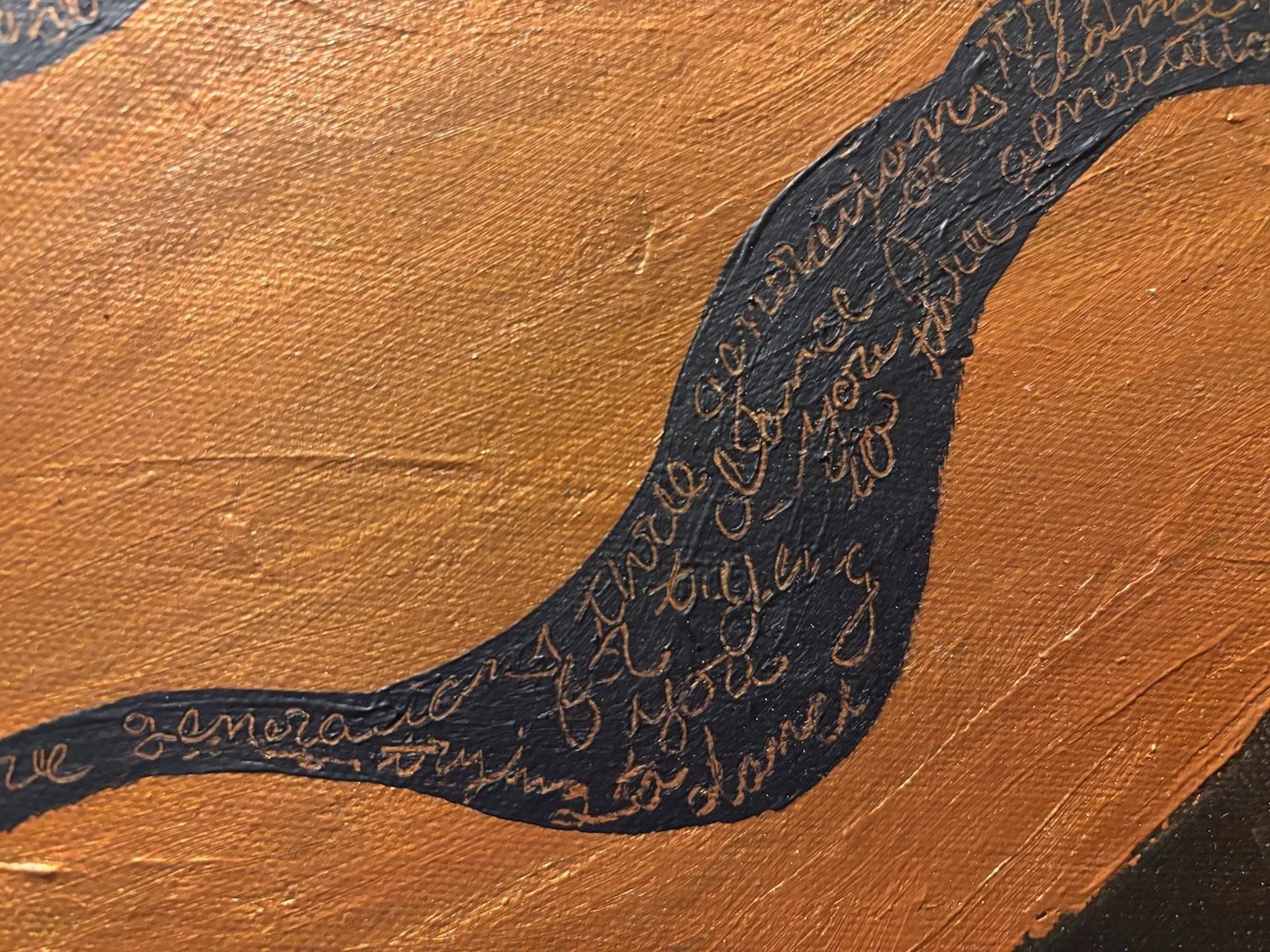
“Buried the Scissors to no Avail”, Acrylic on Canvas. 2008,32x40 | detail below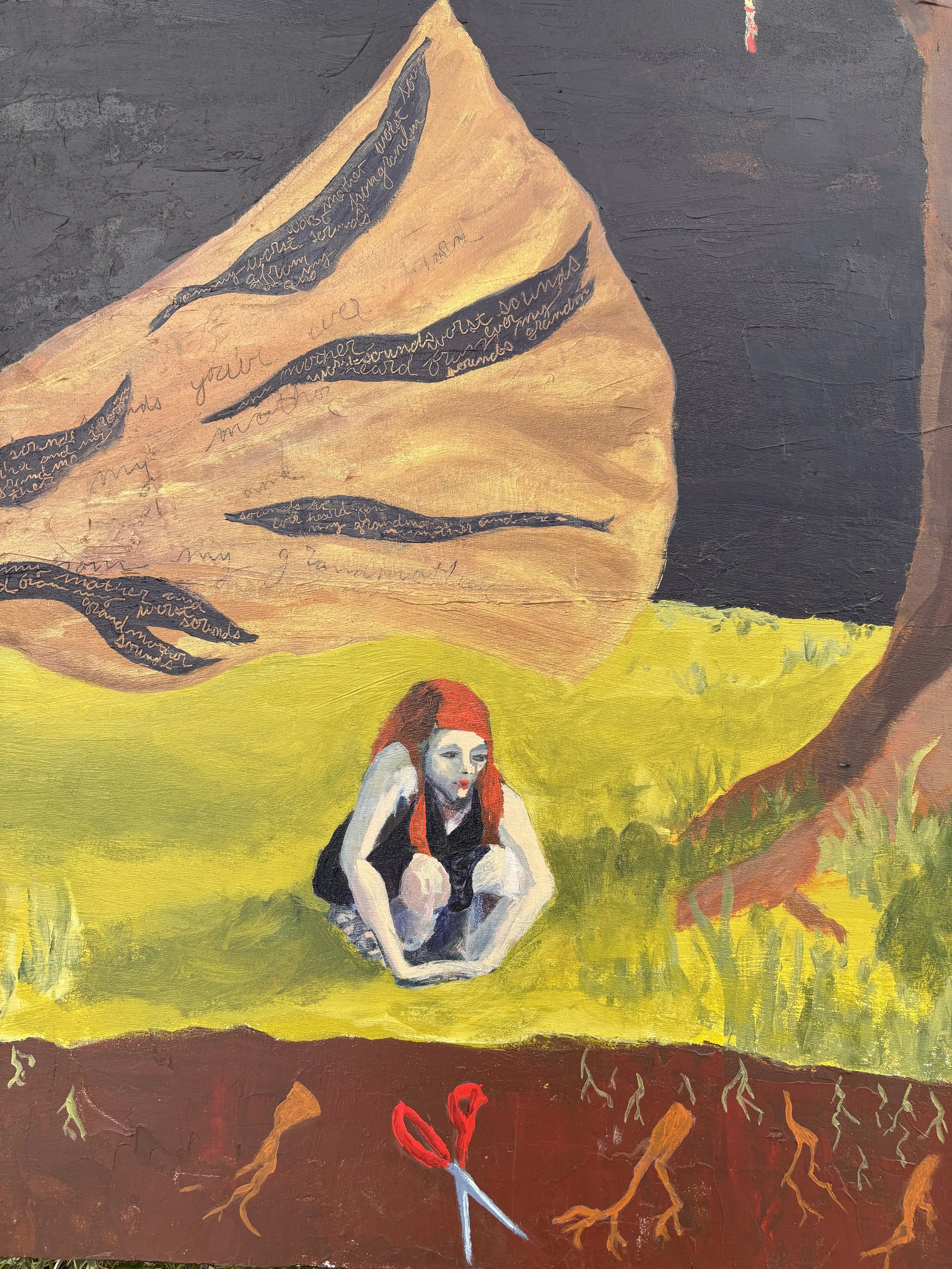
The sketch, which later became a 32x40” acrylic painting, depicts a landscape with the grass line running along the bottom edge, a couple of inches above the bottom, showing the exposed earth underneath. In the grass, I am crouched, ashen, and patting down the grass after burying a pair of scissors.
Music visibly blares behind and over me from an amp that is hooked up to a record player beneath the ground. The sound is opaque, trapping me in this position, and I don’t struggle against it. A tree grows nearby, with a rope hanging from one of the lower branches, frayed at the end.
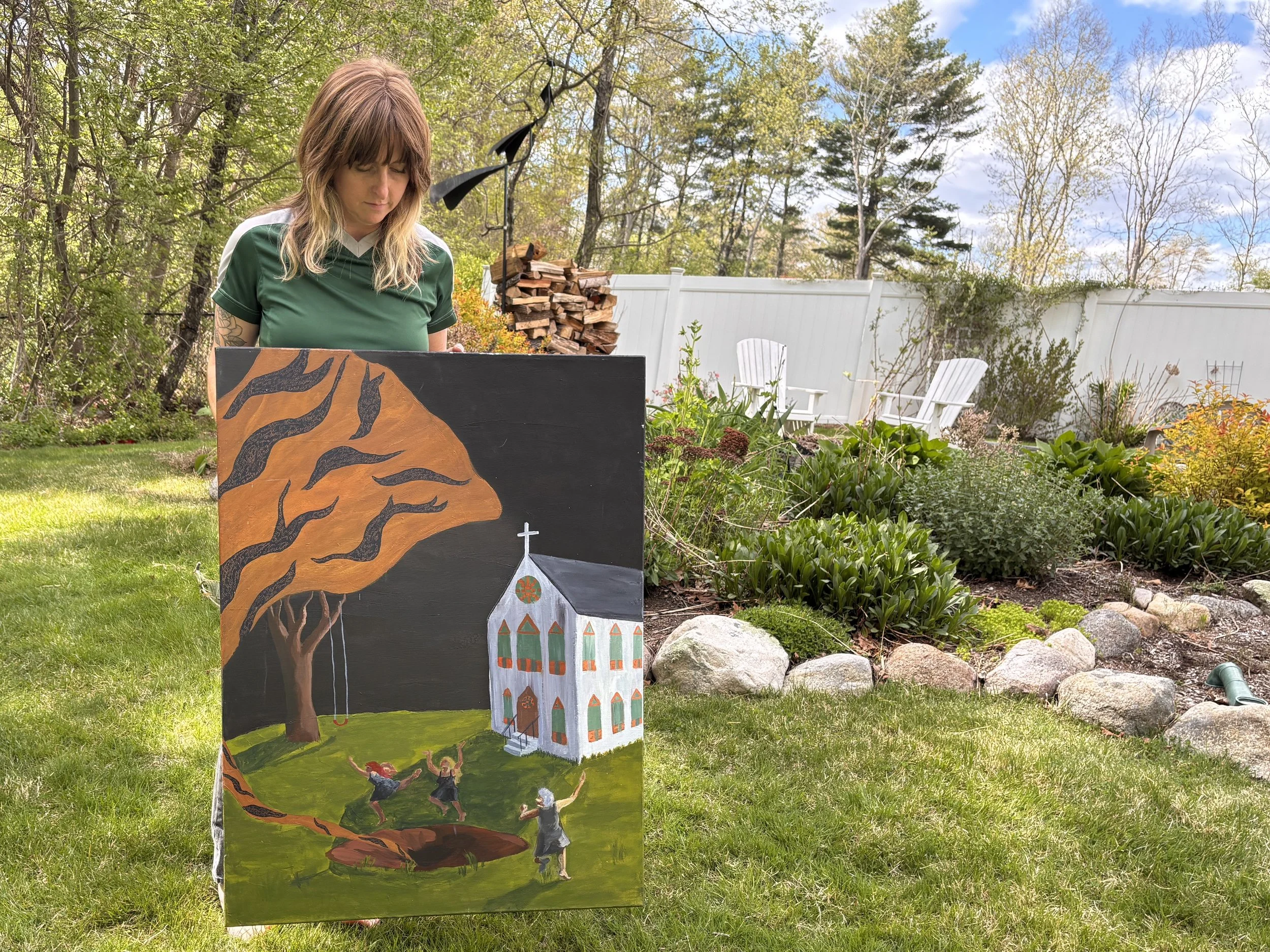
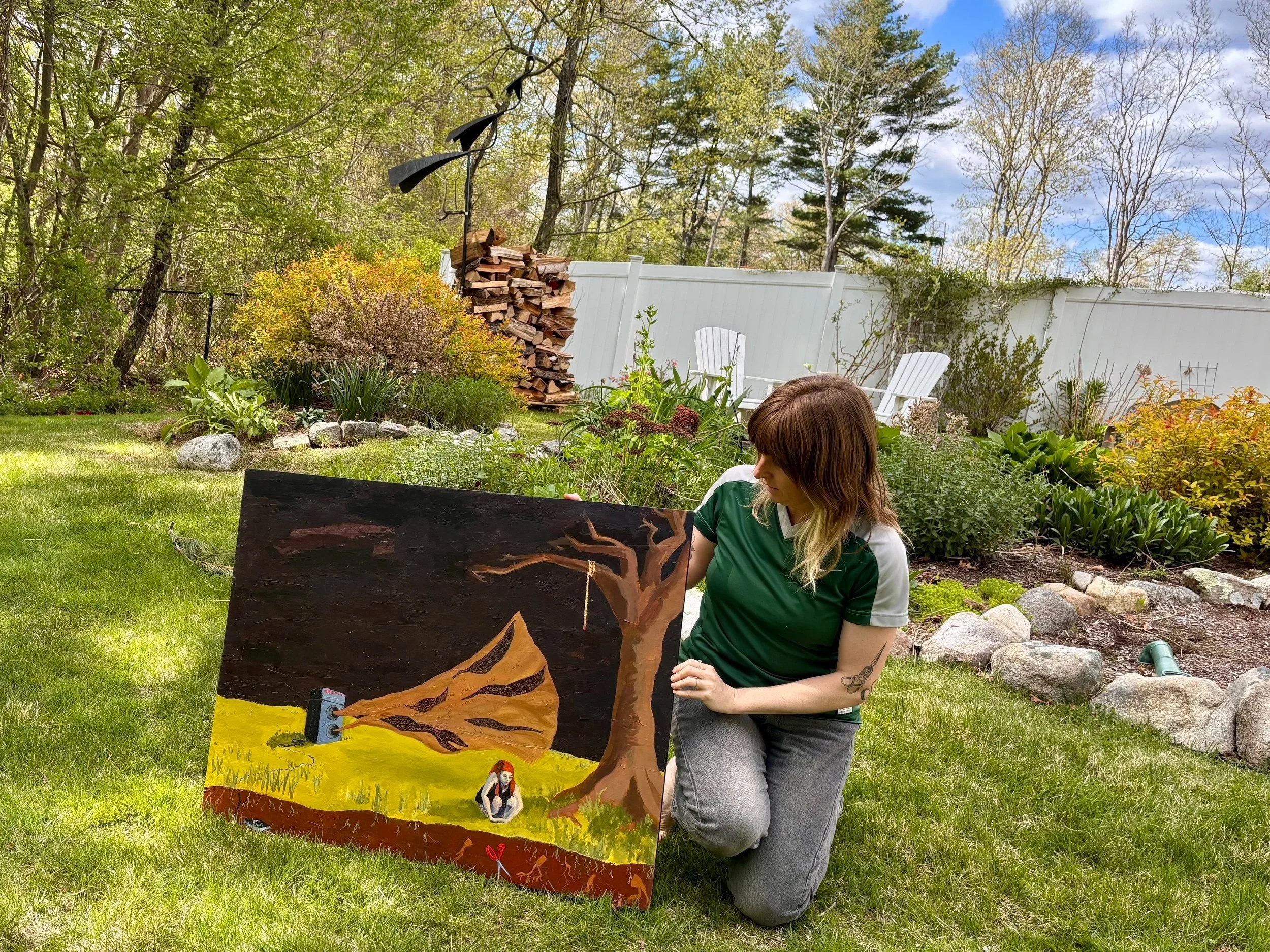
“Lifting the Horror to the Blackened Sky” 2008. Acrylic on Canvas 30x40“Another painting from this series depicts a church, along with three women leaping in a dance around a hole in the earth. The hole reaches down deep into the ground and then erupts with the same dense sound covered in sgraffito. Their dance lifts the sound up into the blackened sky.
A lonely red swing hangs unmoving from an old tree. The etched words of the sound try and fail to contextualize the sound of the horror that erupts from a mother after they’ve lost their child. Three generations of women, my grandmother, my mother, and myself, dance around this hole of despair. Three generations of women who woke up under the same roof one early morning in November to the tragic fact that Billy was gone.
A small collection of large paintings ripped through me over that next year until I realized I was avoiding the studio and then holding my breath once I started painting. I turned to landscapes and florals.
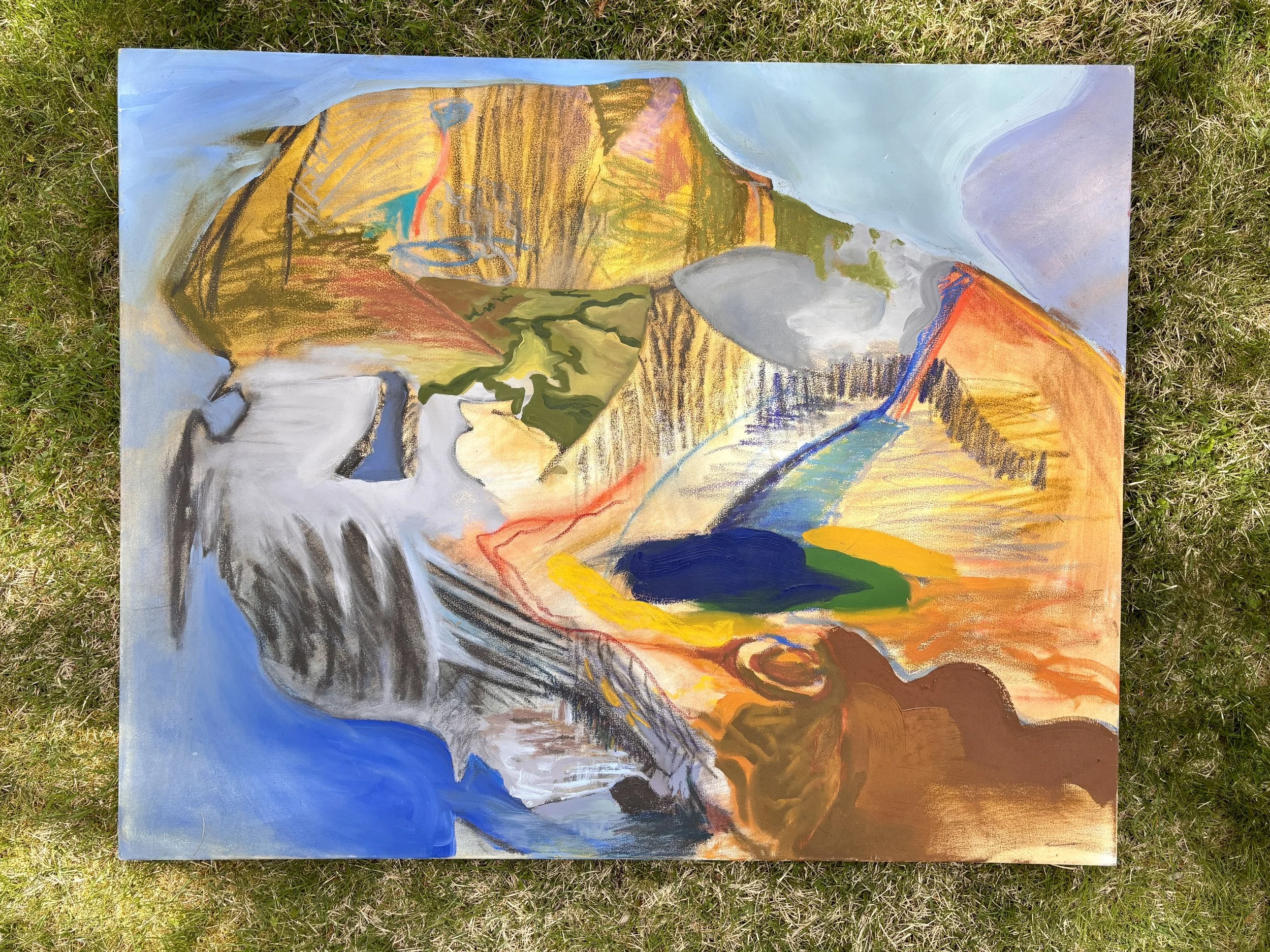
“Yellow Earth”, 2011. oil on Canvas. 40x50I grew up gardening next to my parents. When it came to landscaping, it was all hands on deck in our family of six. Seven when you count Nana, which you should. I’ve never had to think much about the way a leaf or flower grows. I’ve always had a pretty solid handle on not only that, but also the way individual plants’ root systems develop.
Landscapes and florals were a language I innately understood
For decades, we divided our native plants in the yard every season, sometimes adding more from the neighbors across the street or from the local garden shop, and spread them around the edges of the woods and any other place we could fit them.
Landscapes and florals were a language I innately understood. I leaned into them and found both solace and plenty of space for exploration. I was learning how to paint, but I understood plants.
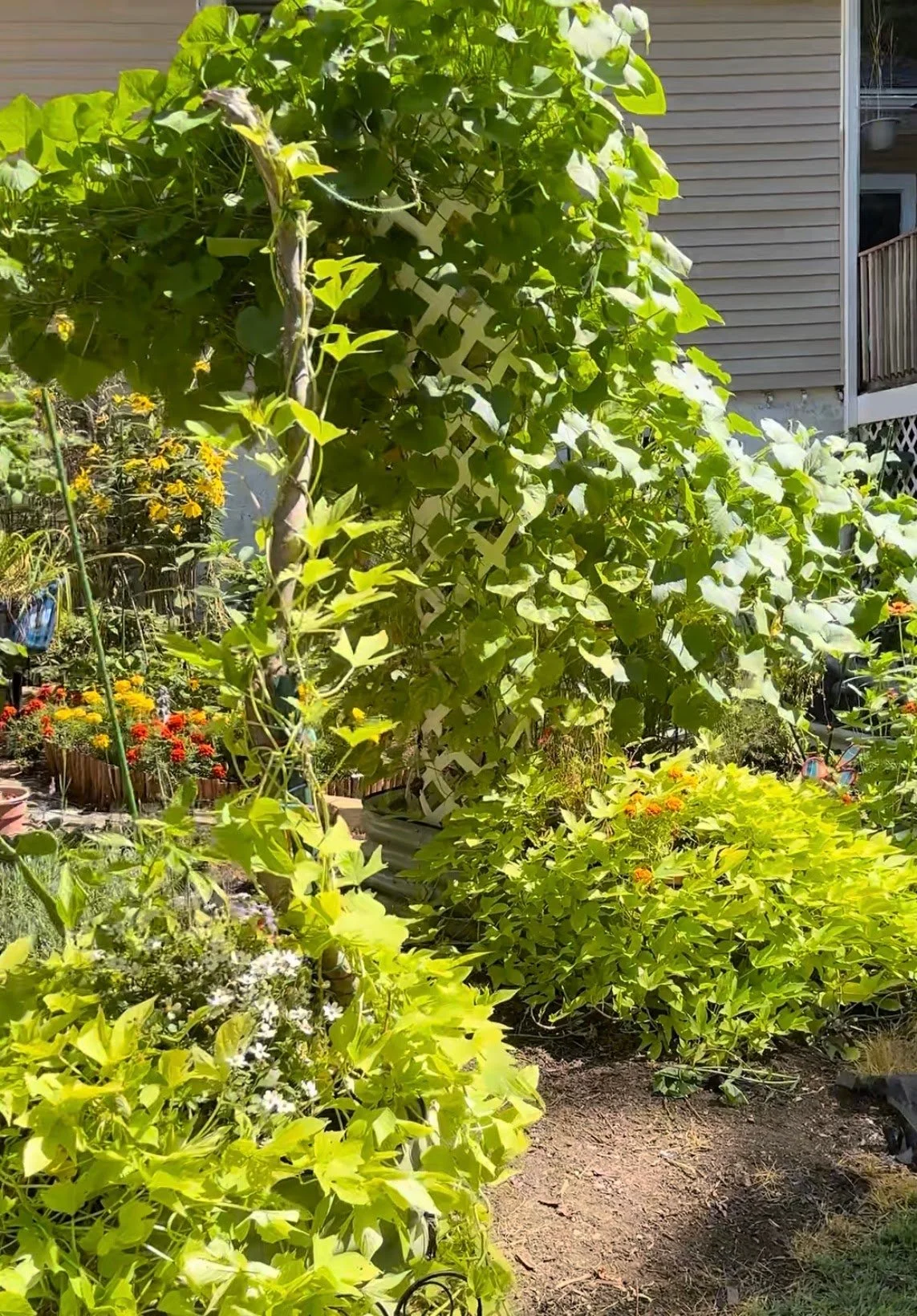
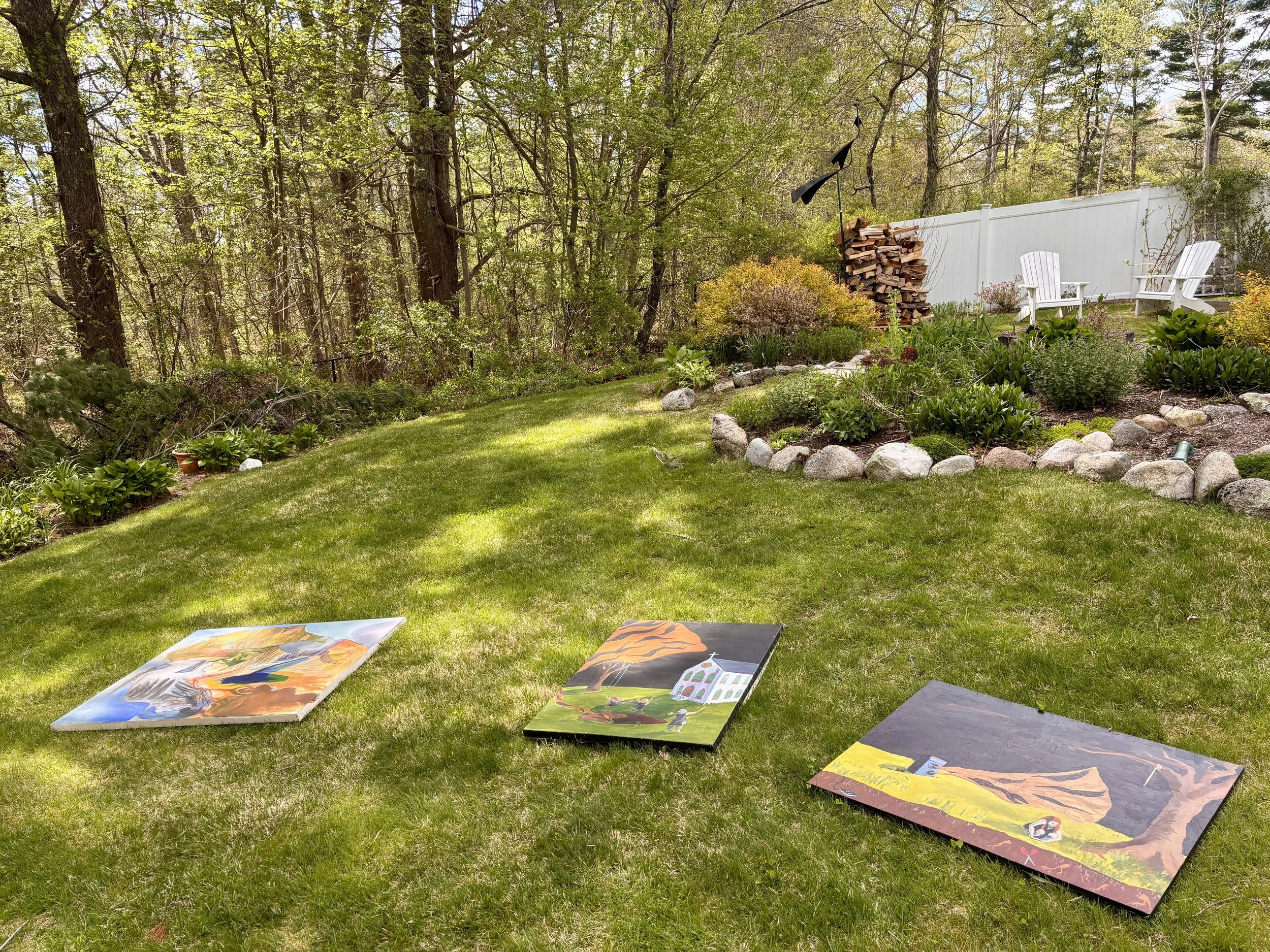
Beth's garden, Paintings in Beth’s spring garden & above couch (below): “Yellowstone Forever” 2011. Oil on Canvas 48x60
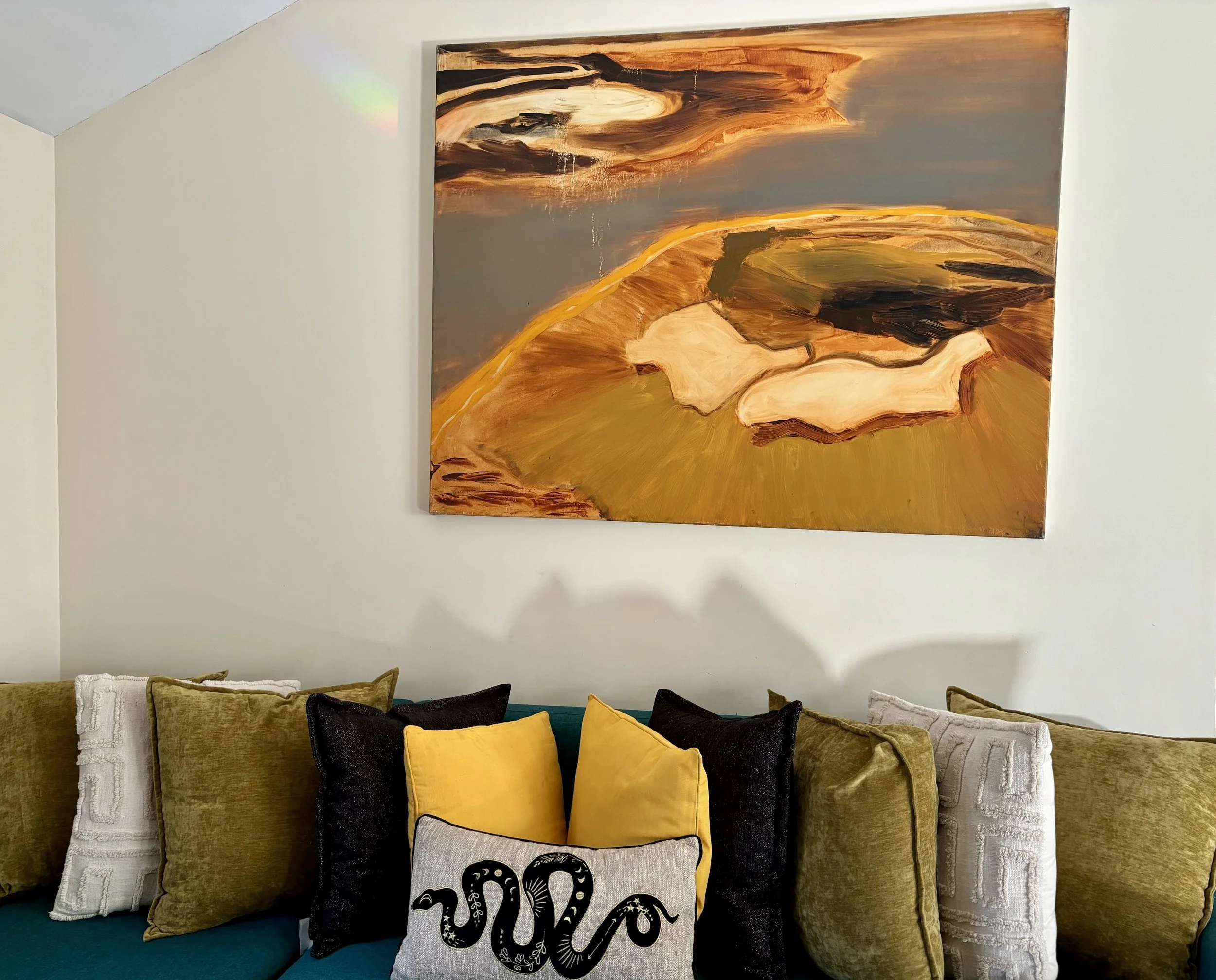
“Yellowstone Forever” 2011. Oil on Canvas,48x60.Making Work That Could Live in People’s Hands, Not Storage
At some point I turned 30, and found that ceramics fit my studio practice better than painting. This was because I didn’t want my art to continue to pile up in my shrinking storage space, and I knew I could learn how to make a really good mug and sell it, while remaining firmly planted here on the South Shore of Massachusetts. This is where I owned a home with my fiance and both of our proudly working-class families have been for generations. We hoped to someday raise children here too, and I had no interest in exploring the world of fine art in Boston or New York.
To love ceramics is to love the grind. It's about being okay with loss. Without a consistent studio practice, the work doesn't have a chance. A piece will crack, melt, or explode, and without bumping up into those mini tragedies again and again, you’ll never learn how to work through them physically or psychologically.
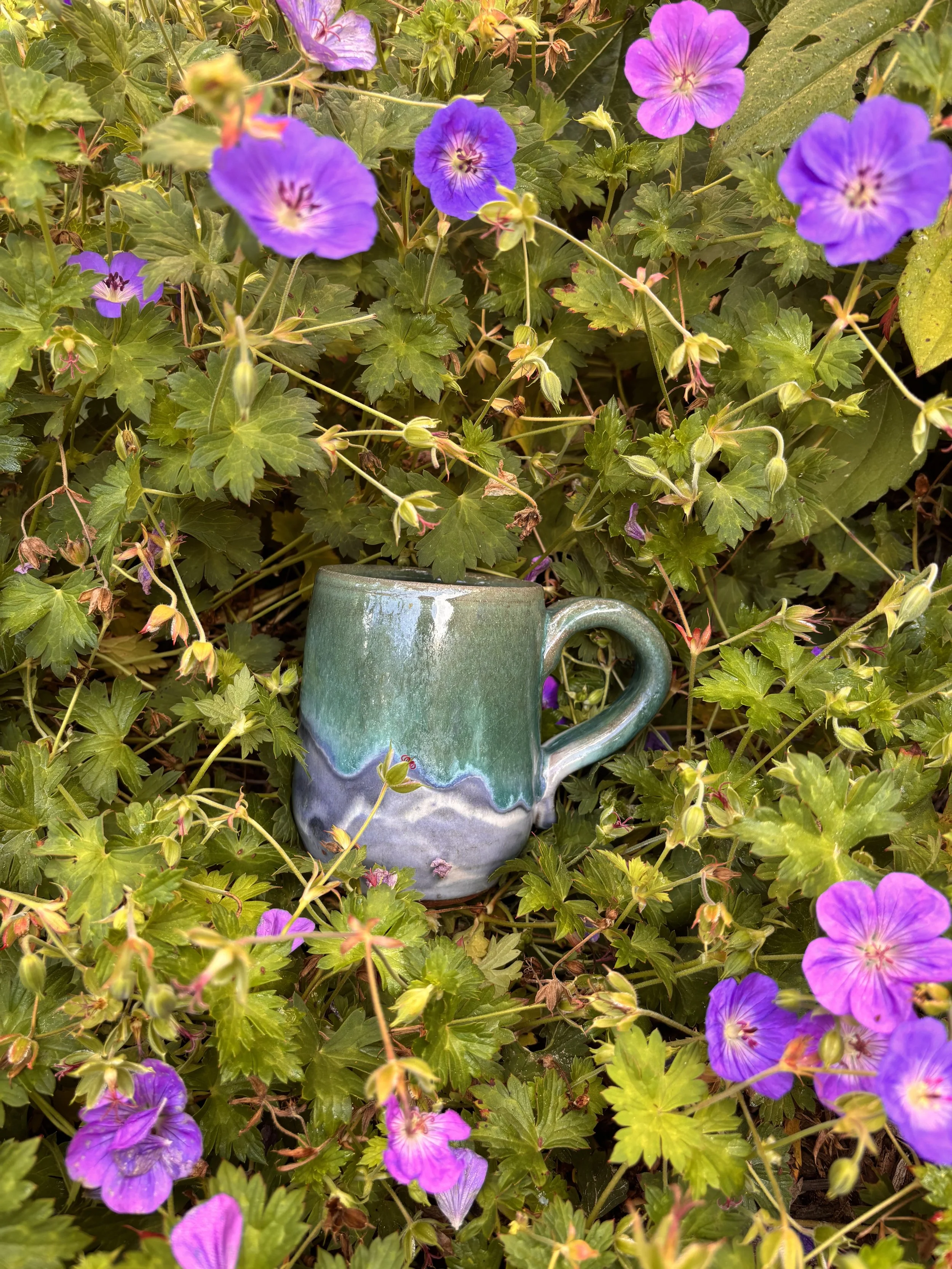
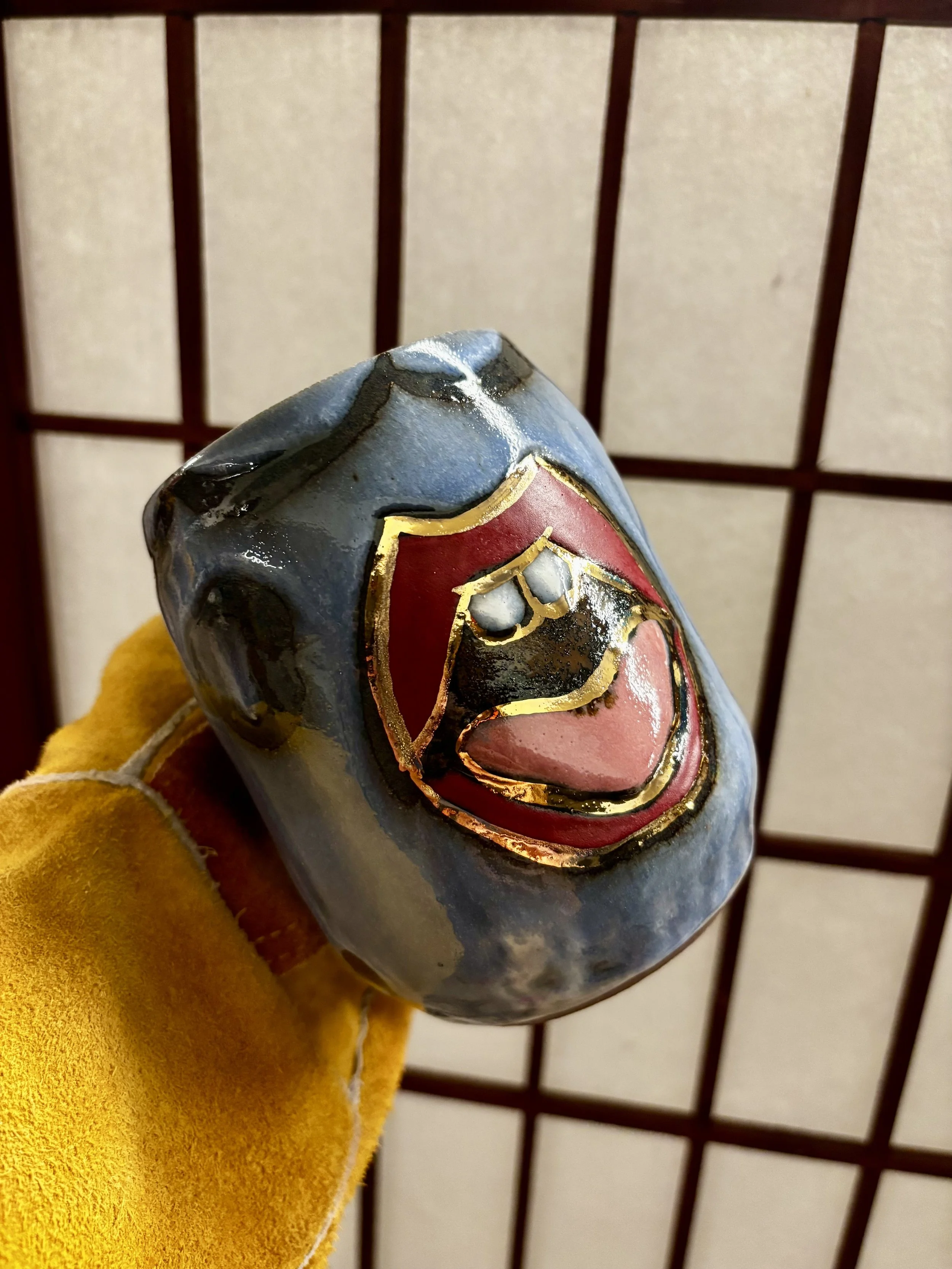
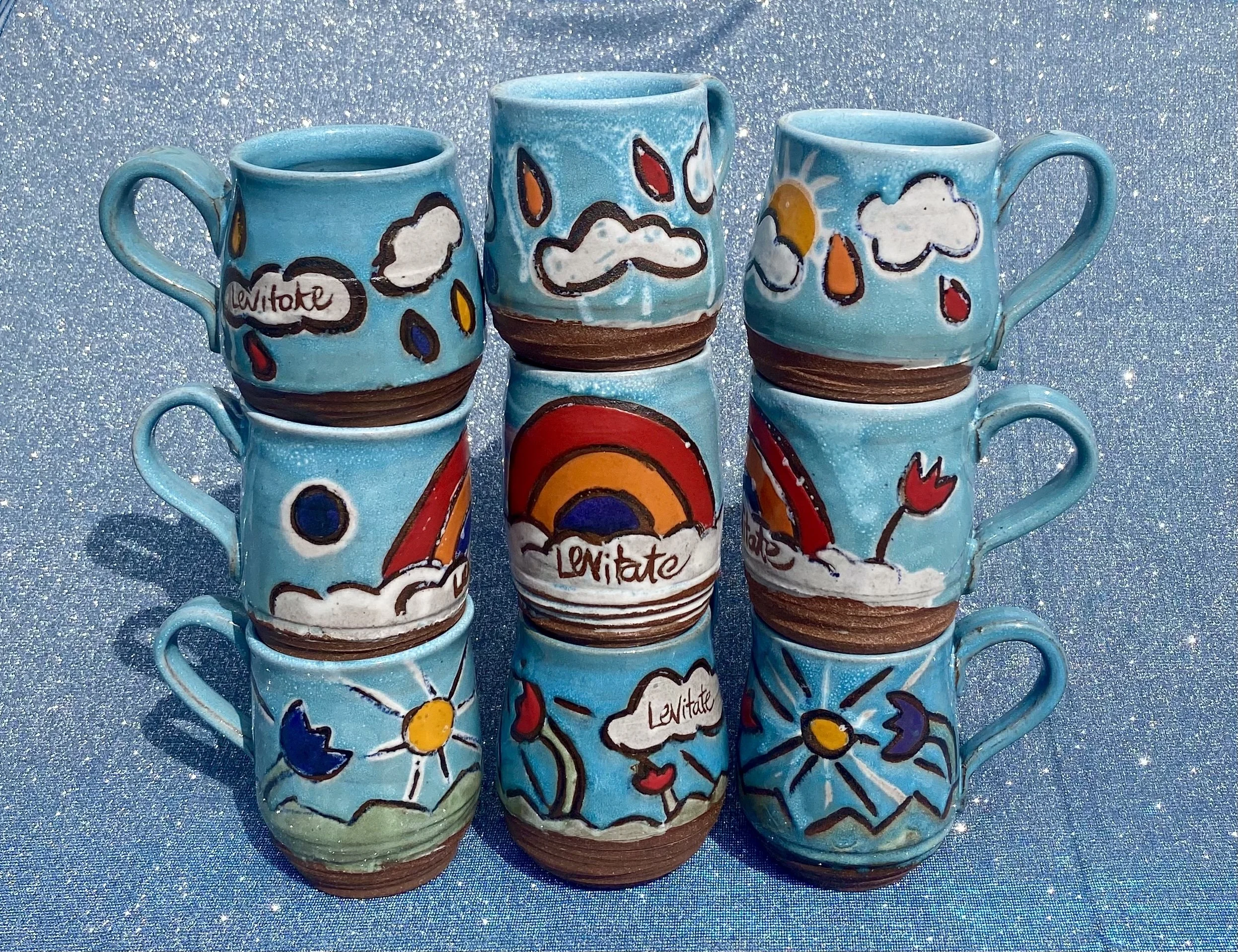
Above: signature glazed mugs & Customized run of mugs for Levitate. Gilded Mouth Mug, available in Plymouth at Sprezzatura BoutiqueMy ceramics practice was built on how I liked making work. I like to grind. I like moving 50-pound boxes of clay around the studio. I'm fine with a piece flopping apart on the wheel or cracking after a firing. A baker’s dozen and a potter’s dozen is the same thing and accepting that early helps.
That being said, I’ve always been a painter at heart and preferred brushes. Several years into my practice I could reliably pull a piece from the kiln and have it be the shape I imagined when I sat down at the wheel. Once I figured out the form, I moved to the surface. I learned to build up layers of wax and glaze using a combination of brushed and dipped techniques to get the images from my head and out through my hand, this time trapped within a glassy surface of a functional piece of pottery, usually a mug, vase, or small dish, because those sell and remember, I did not want my art piling up at home.
For a decade, this is where my creative practice flourished.
Trusting the dawn of a new season
All the while, the seed of my non-profit, Creative Pathways, was developing. I’ve always wanted to work for myself. Control over my time has always been my most highly valued asset. I graduated from MassArt with two BFA’s, one was Painting and the other Community Arts Education.
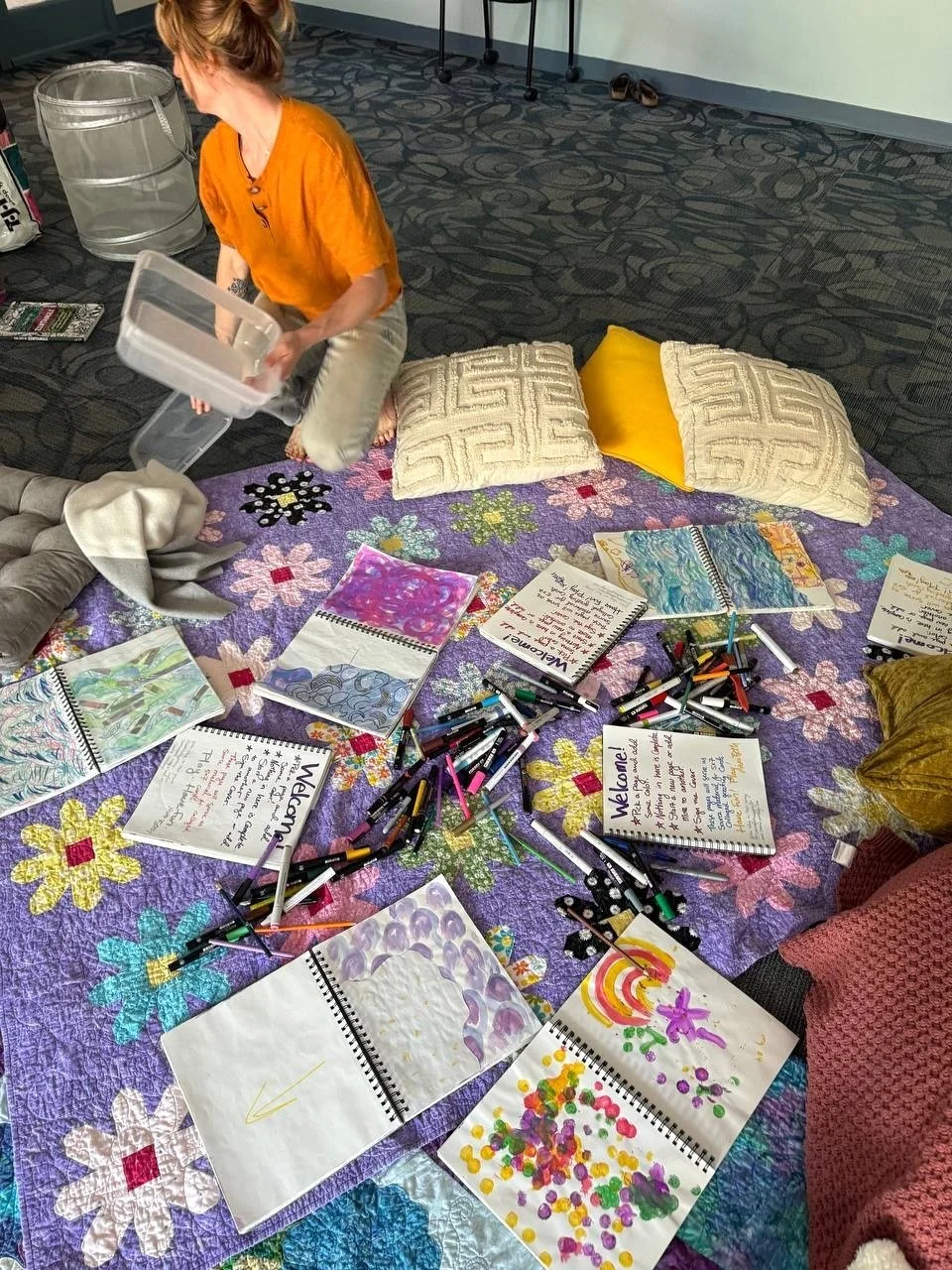
Pictured: The early days of Creative Pathways. Beth preparing 2024 teen arts program in Whitman using her first local cultural council grant.I chose the type of work I did based around how I wanted to live, locally and deeply invested in my community. By early 2025 my business had found its rhythm and my husband Jeff and I decided it was time to incorporate as an official non-profit.
Beth speaking at The Douglas House in Brockton in 2025 during the installation of the collaborative triptych “Sentimentu di Kabu Verde.”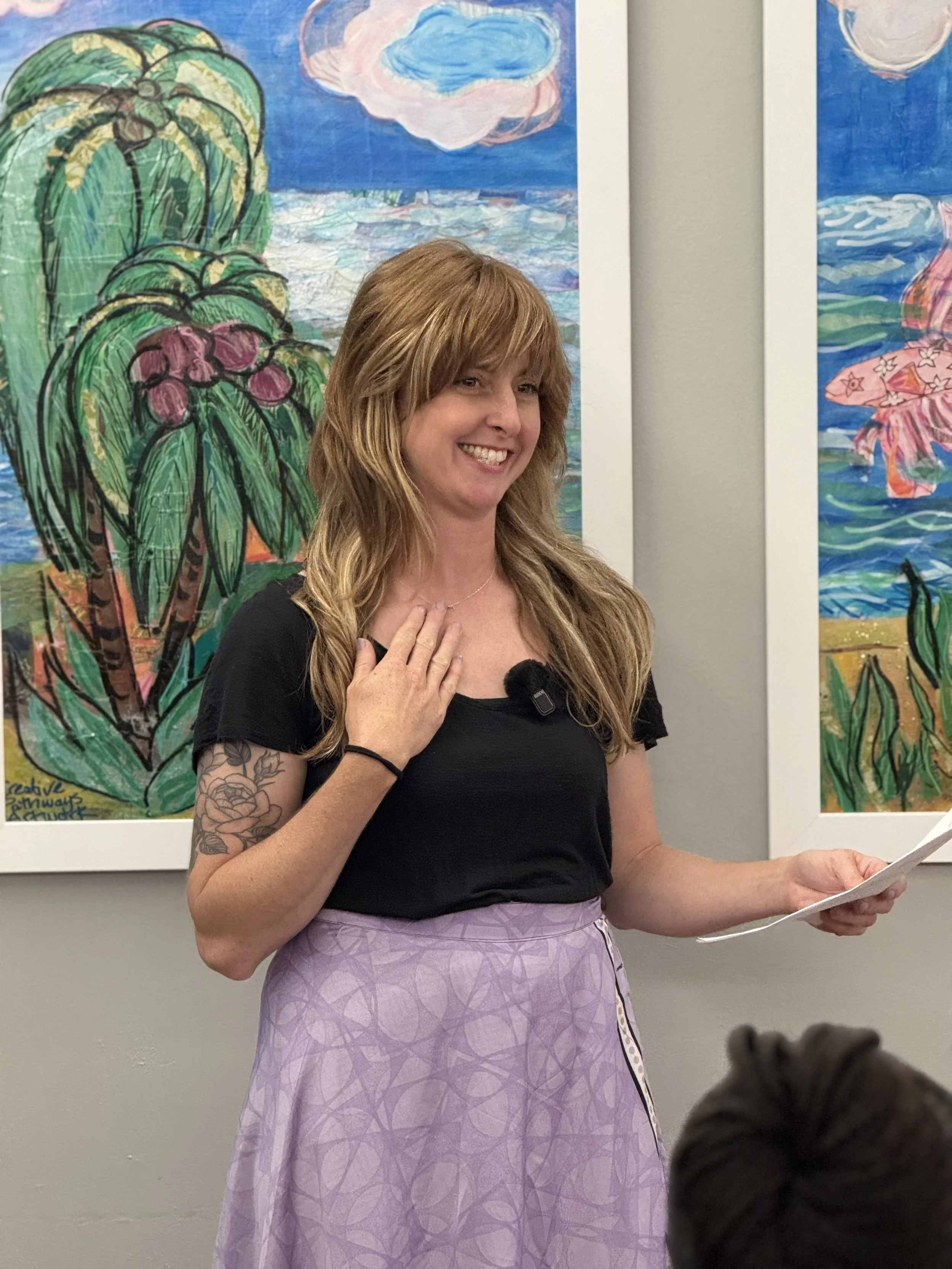
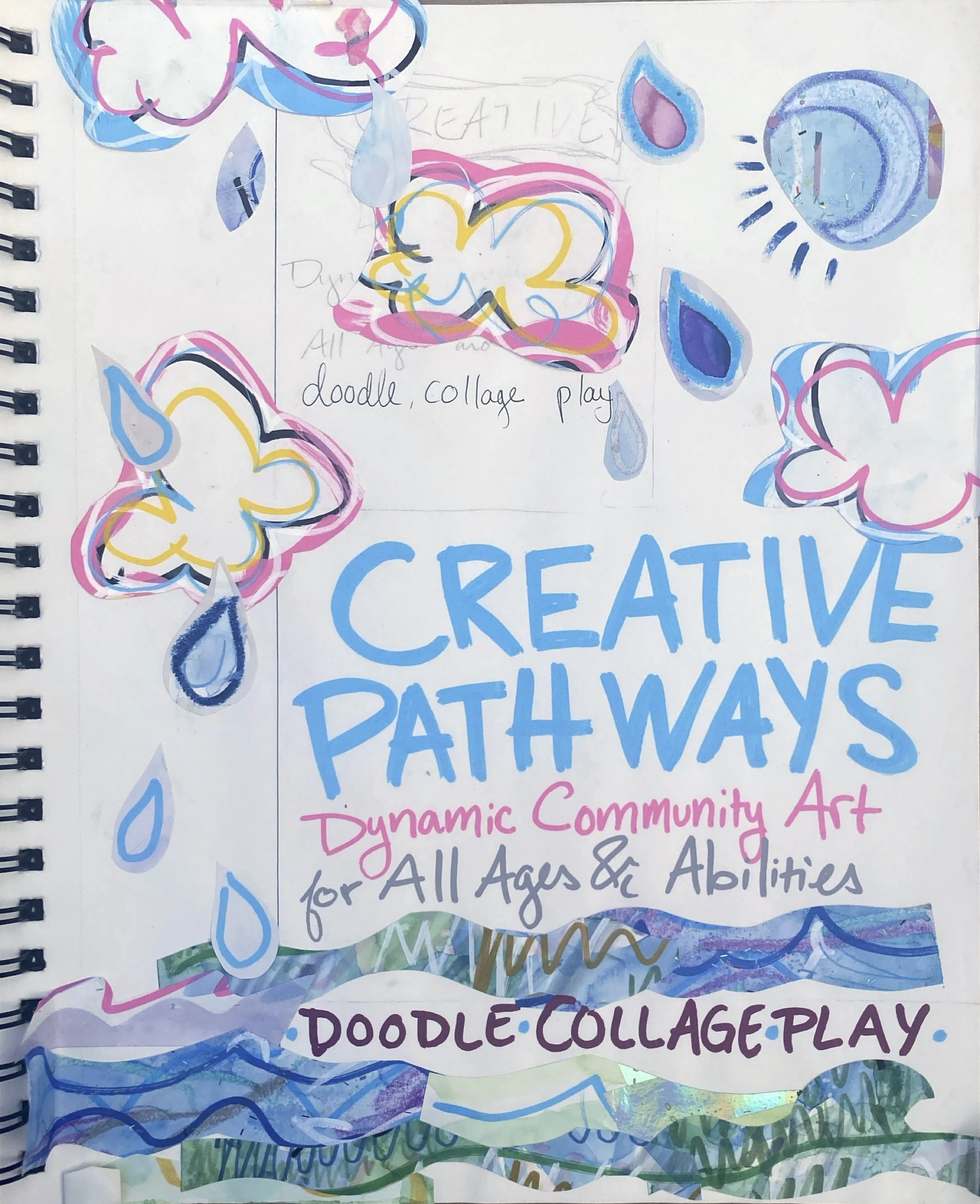
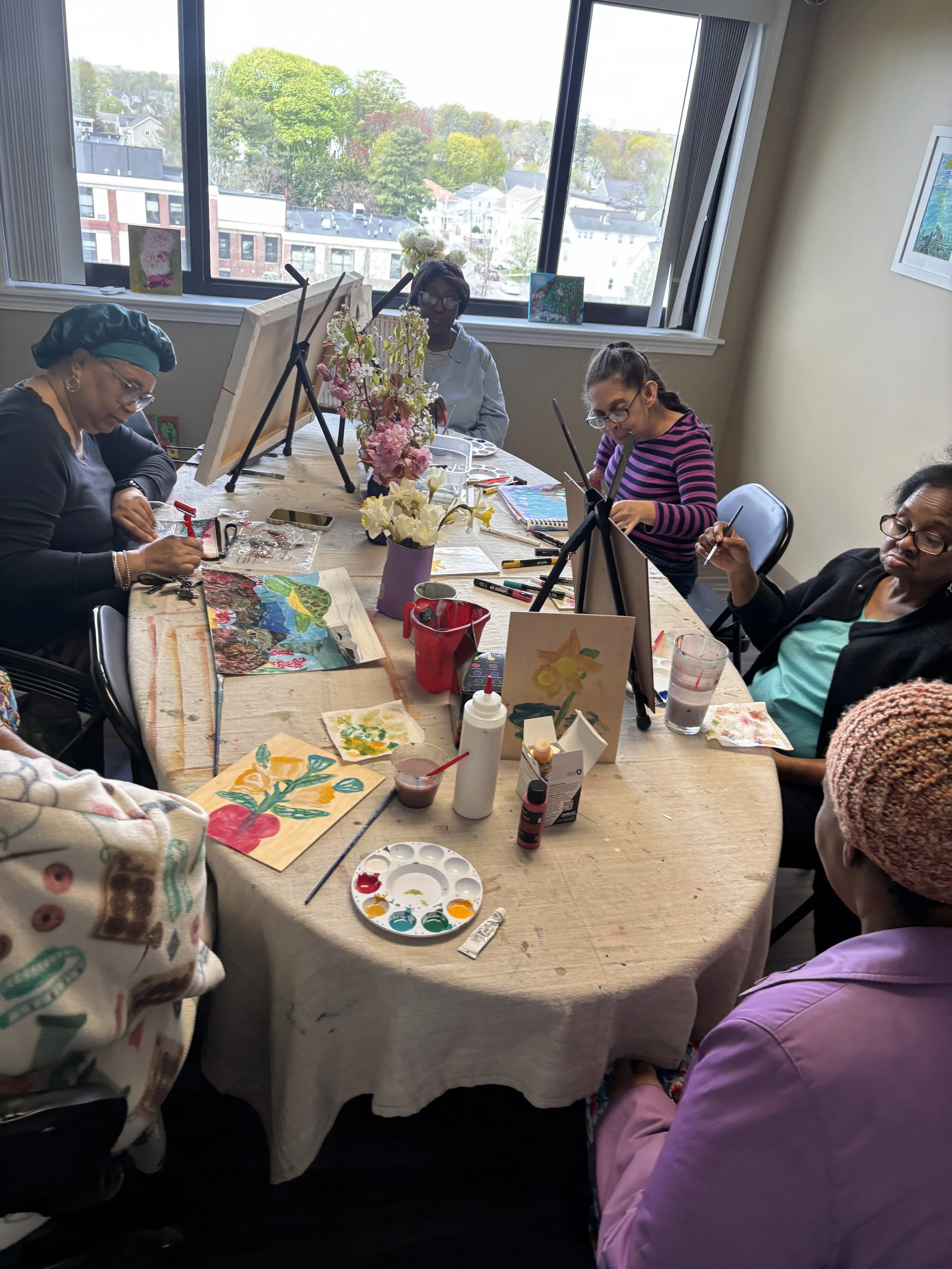
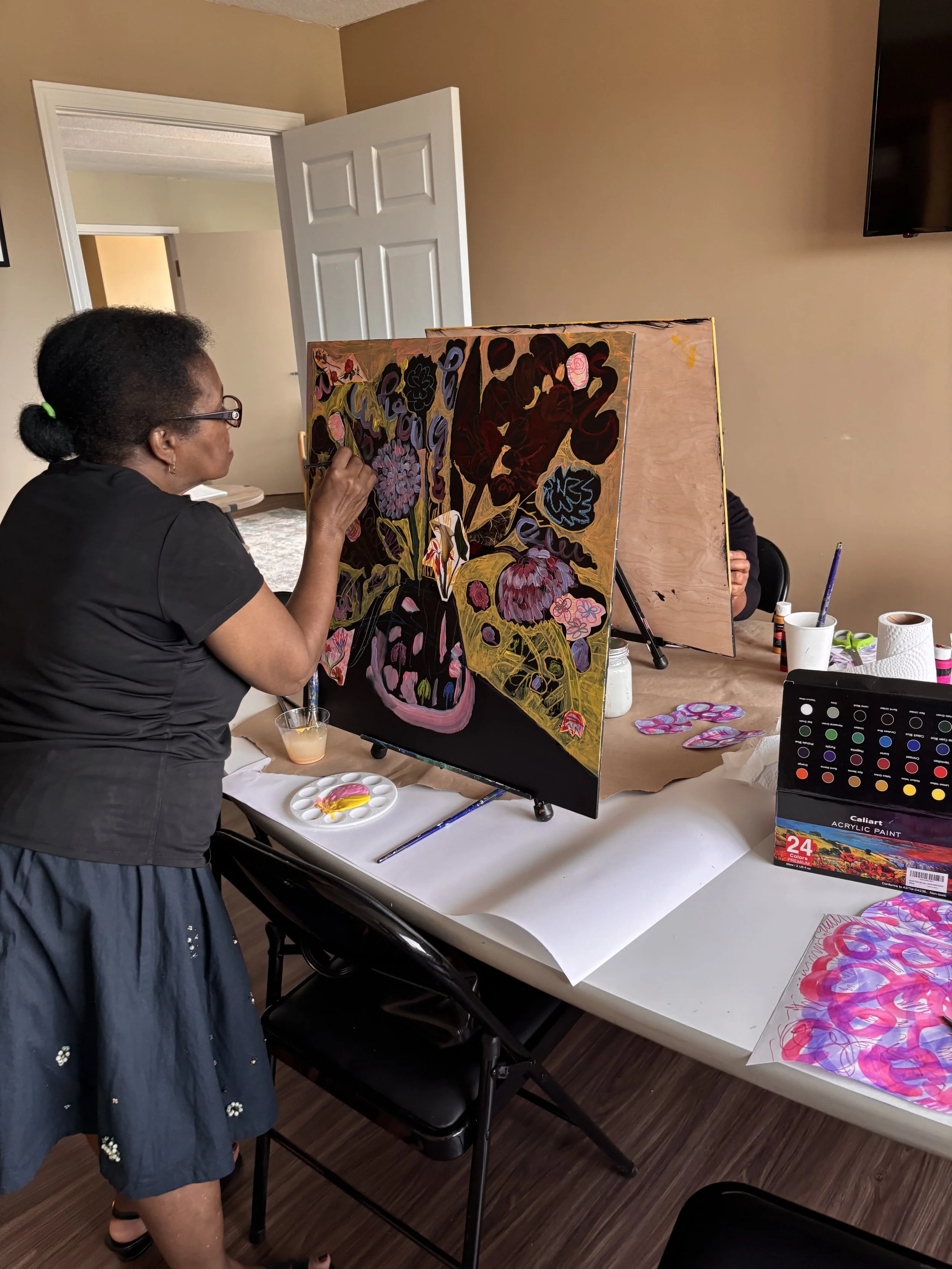
Pictured: Beth speaking at The Douglas House in Brockton in 2025 during the installation of the collaborative triptych “Sentimentu di Kabu Verde" & her collaboration with the group every week. Learn more on episode 15 of Let's chat.A life of creativity has a non-lineral path.
I spent years making many different styles of paintings, then years making different styles of ceramics, all the while working a variety of jobs that contributed to my current professional knowledge.
By the following fall, I was surrounded by supplies for Creative Pathways. Panels, brushes, acrylics, collage materials, and various papers that were getting harder and harder to put away. On a cold day this past January, I pushed my pottery wheel to the side and passed off my most consistent wholesale accounts to a friend in the pottery business.
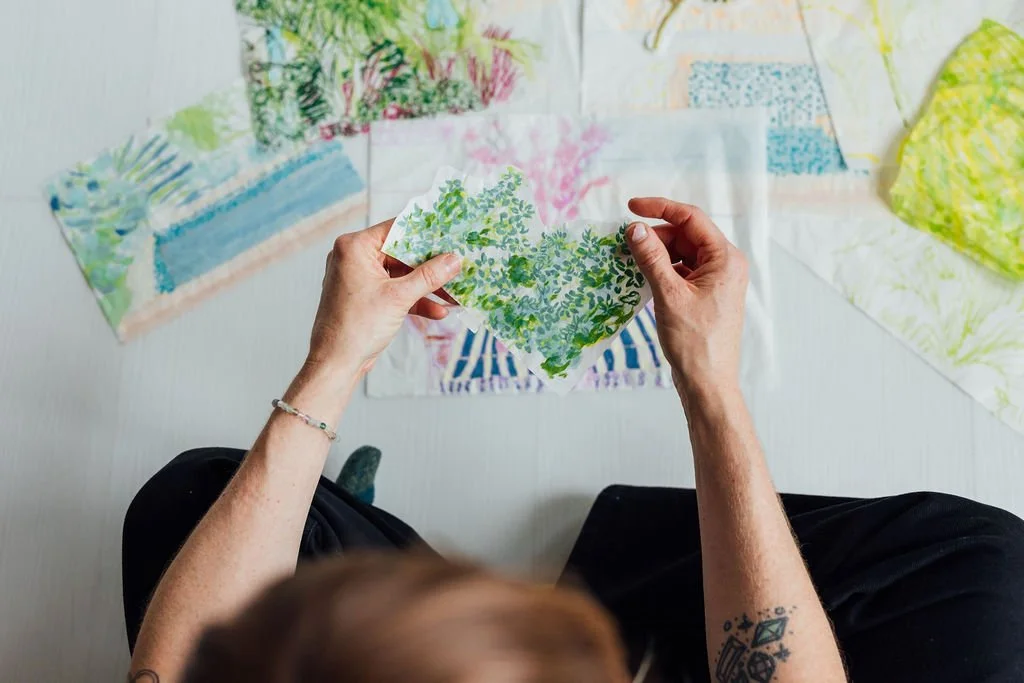
Beth pulling together individual collage pieces she created to start a new painting.| Photo Credit: Addie Roberge I’ve never been hung up on sticking to one medium or one style. I’ve always focused on channeling my authentic artistic vision through my hands and out into the world. When I pull back at age 40 and look at the reality of my life’s work, I can see the throughline.
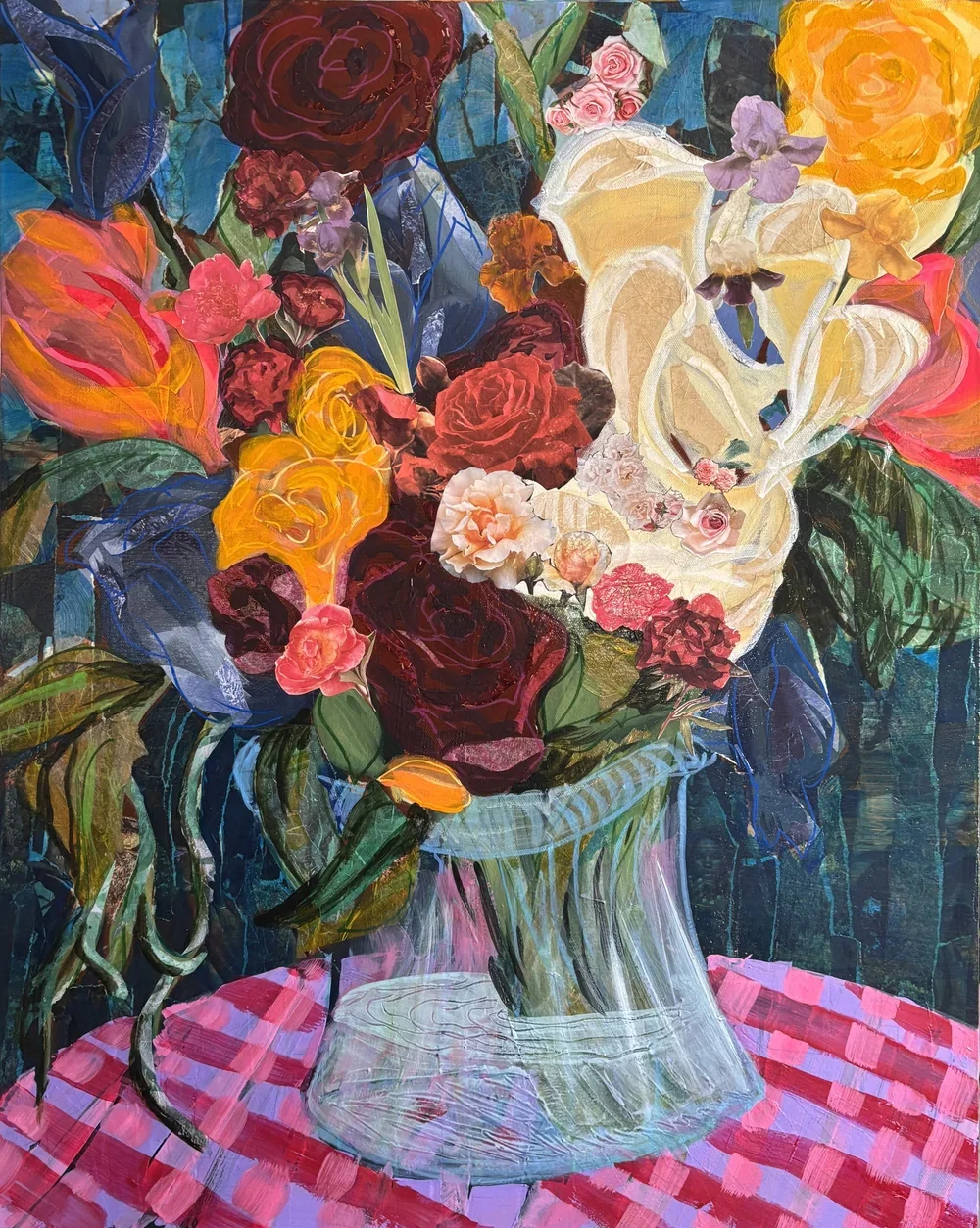
“Brimming”, Acrylic and Mixed Media on Canvas, 30x24. Currently on view at Slacktide Kingston, ma and available for purchase here.Working on landscapes and florals are the perfect compliment to the strenuous and joyous life of a career-focused mother of young children. I have more folk art sketches within me. At this point in my journey, though, I am excited and compelled to create the landscapes and florals that I have a fully formed language for. I am confident in the fact that creativity comes in seasons, just like everything else. All of these ideas will take their time and introduce themselves into the work when they are ready.
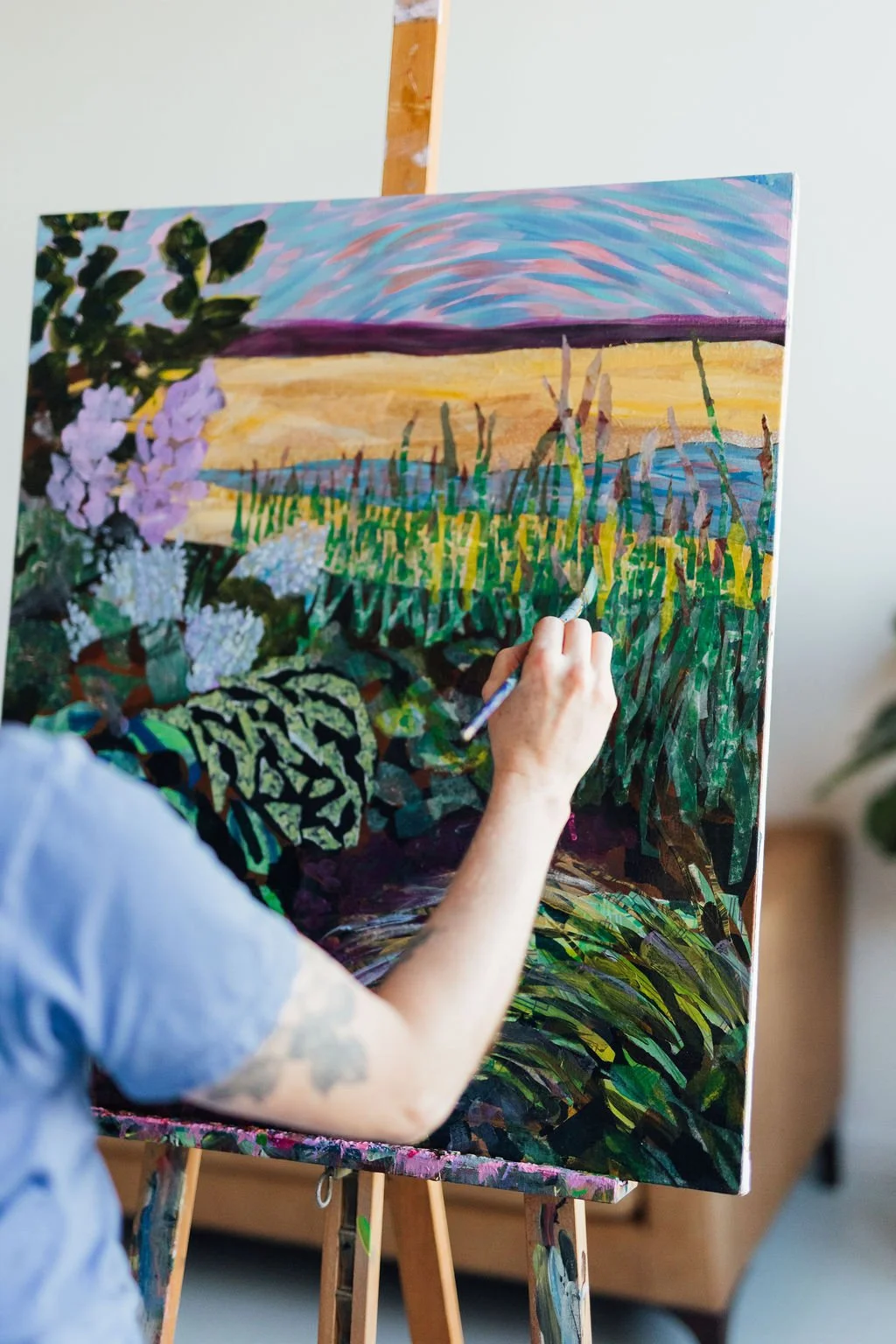
Beth working on “A Second Glance”. Photo Credit: Addie RobergeHaving spent my lifetime deeply rooted in my suburban community, I now see those roots as a launching pad. I’m now excited and curious about venturing further into the fine art world of Boston and New York, finally seeing a place for my life’s work. I’ll be spending two weeks as a resident artist at the Chautauqua Institution in New York at the end of August and truly cannot wait to find out what is inside my own head as I open the channel for it to spill out, uninterrupted, in a steady stream. I’m a little bit scared to be honest with you. But I’ve gone too far before, and I trust now that I’ll be able to hear my inner knowing and find my path.
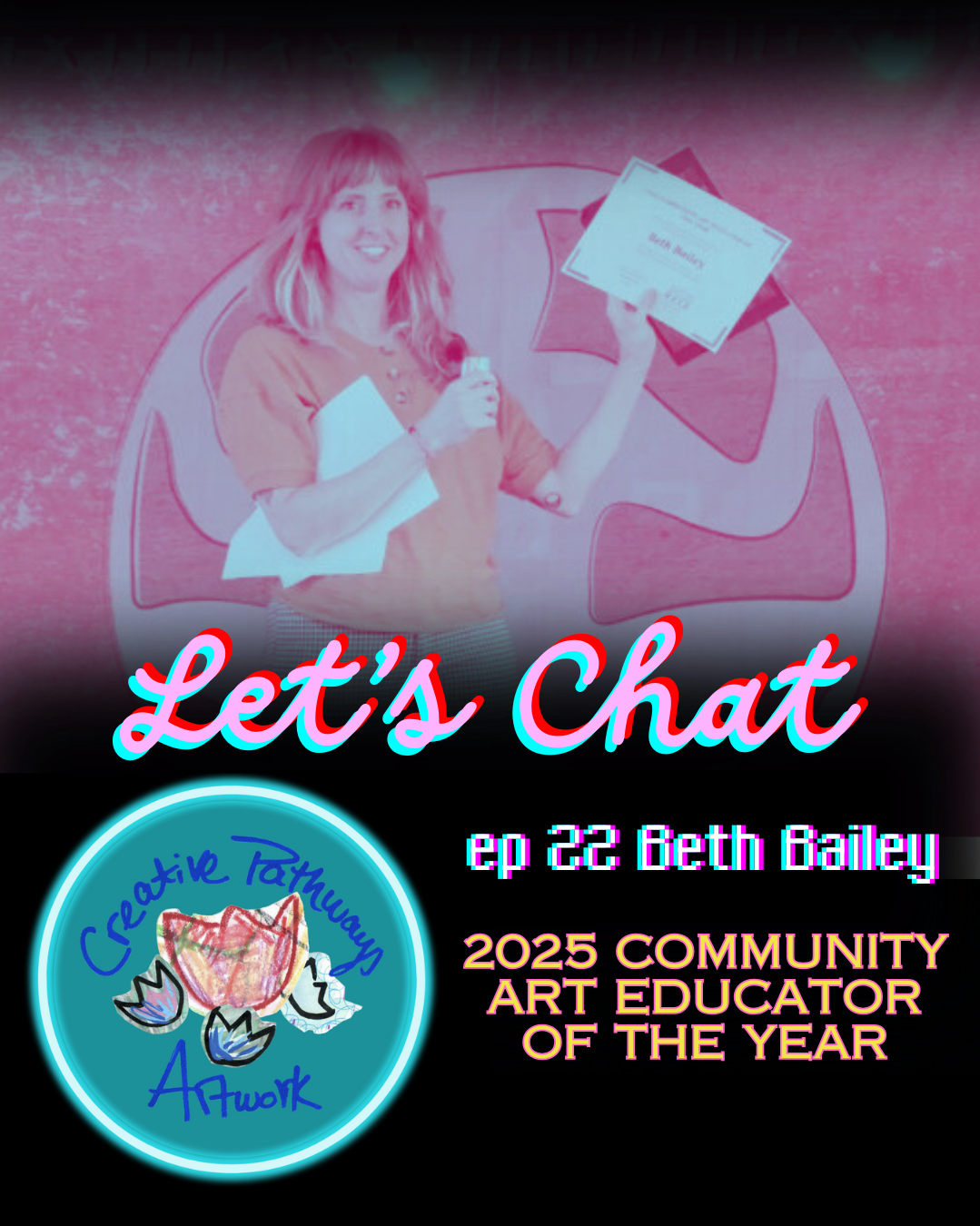

I’m proud to share that you can currently see my work on display at Ivy Lane Gallery on Newbury Street in Boston, Slacktide in Kingston, and Sprezzatura in Plymouth, MA. Looking ahead to 2027, I’m happy to share that I’ve been invited to participate in a group show at the Bumpus Gallery in Duxbury, MA in May, followed by a solo show at the Dolphin Gallery in Hingham, MA in June.
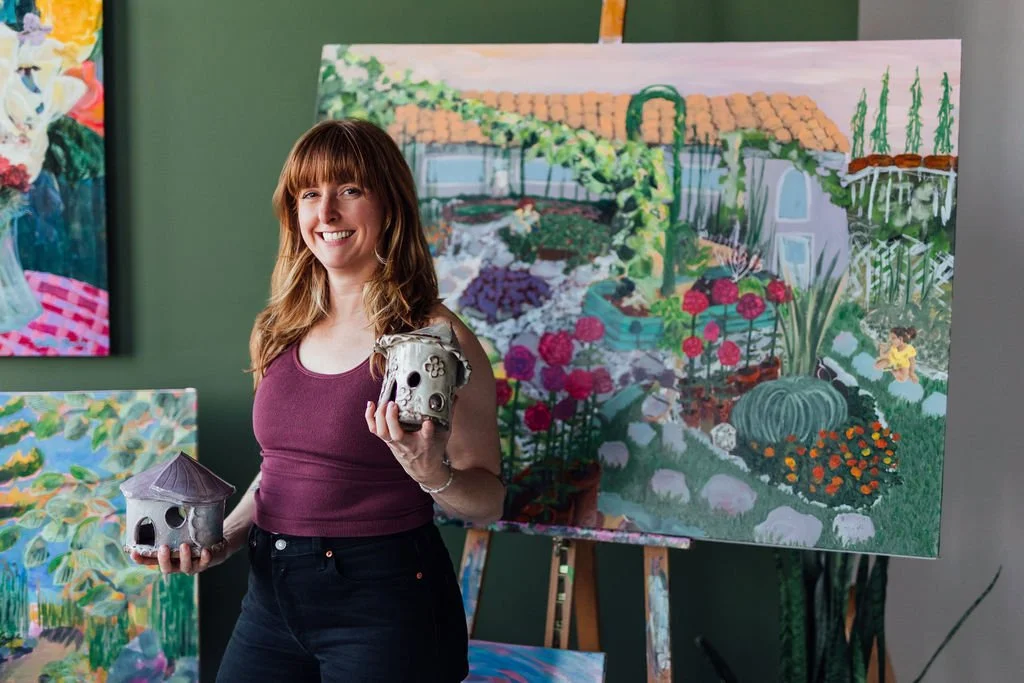
Beth Bailey is an artist, mother, gardener, creative consultant, community arts advocate, host of Let’s Chat Creative Pathways Podcast, and founder of Creative Pathways. Creative Pathways is an award-winning nonprofit that unlocks artistic potential by delivering collaborative, inclusive art programs to communities.Beth Bailey, A lifelong creative, began her artistic journey in childhood through painting, gardening, and early experiences in ceramics. After years focused on clay, Bailey has returned to painting, bringing the discipline and structure of the ceramics studio into her evolving mixed media practice inspired by botanical forms and the natural world. She holds dual BFAs in Painting and Art Education with Community Studio Specialization from Massachusetts College of Art and Design and continues to create work rooted in texture, growth, and creative connection.
Catch a vibe at @Bethbaileystudio & sign up for her newsletter!